 United Kingdom
 China
China Hong Kong SAR
 Indonesia
 Japan
Japan Malaysia
 Middle East
 Qatar
Qatar Singapore
 South Africa
 Thailand
 Turkey
Dubai’s property market - Resilience backed by straight facts
Dubai's real estate market has undergone a significant transformation over the years. What was once seen as a fast-paced, speculative market is now a well-regulated and globally trusted investment hub. While "resilience" is often the term used to define it, the real story lies in how the market has adapted through strong regulations and smarter investment behaviour.
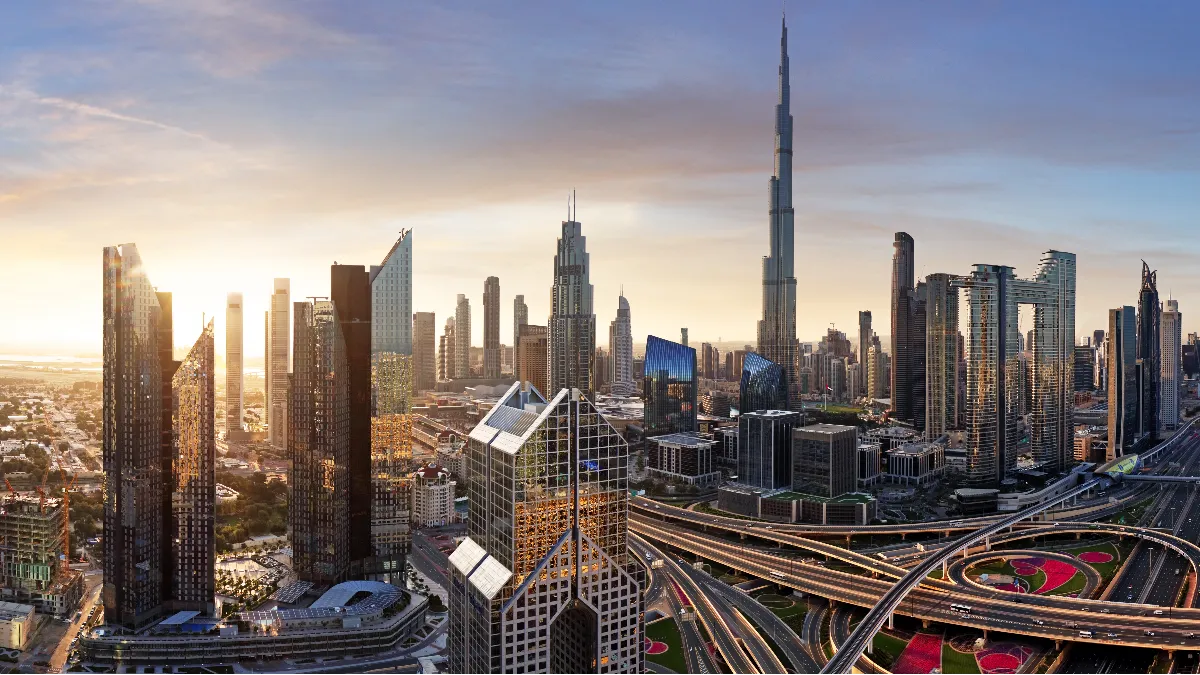
At present, the focus seems to be clearly shifting! Instead of short-term buying and selling for instant profits, investors are seeking long-term value, steady rental income and capital appreciation. So, to truly understand how the Dubai property market works, it's crucial to look beyond the impressive skyline and focus on data, trends and policies that shape it. That's where you can see the real picture.
2008-2014: From correction to institutional maturity
The 2008 Global financial crisis was a massive turning point! Property prices dropped by nearly 50% as money on the market dried up. But the recovery didn't just happen randomly; it was carefully planned.
The Data: Between 2009 and 2014, the market bounced back strongly, with an average growth rate of 35.8%.
The Shift: During this phase, Dubai introduced stricter regulations to bring calm. Law no. 13 of 2008 was implemented to regulate property registrations and RERA's role was expanded. In 2013, the property registration fee was increased from 2% to 4%, which helped to reduce short-term buying and selling ("flipping") and put the market into a better position.
2020-2022: A strong comeback after the pandemic
While many major global cities shut down during the pandemic, Dubai was still performing and reopened quickly and saw a sharp recovery.
The data: After a small dip of around 10%, property prices jumped by 38% between 2020 and 2022
The Shift: New policies, such as the Golden Visa (10-year residency) and 100% foreign ownership, attracted long-term residents rather than short-term investors. This resulted in a more stable market, with secondary property transactions rising by 60% during this phase.
2024: Infrastructure stress-testing
The record rainfall in 2024 acted as a real test for Dubai's real estate market. While many expected it to slow down, the market stayed strong and clearly presented that it can very well handle such challenges.
The data: In the first half of 2024 alone, over 76,000 property deals were recorded,worth around AED 218 billion, an all-time high record.
The insight: For over 9 months, growth remained steady at 17.3%. Buyers also became more selective, paying attention to better construction quality and well-planned communities with strong infrastructure. This led to increased demand for trusted developers such as Emaar and Nakheel.
2026 and beyond: A more stable and safe environment

In 2026, Dubai's property market is handling regional uncertainty way better. Instead of developers pulling away, more money is coming in as people view it as a safe haven to invest.
The data: Dubai's population is expected to reach 5.8 million by 2040. Right now, there's a limited supply in high-end properties including villas and waterfront homes, which are seeing a price growth for about 25% faster than the overall market.
The reality: Unlike 2008, today's market is experiencing stability because buyers are investing more of their own money.
The evolution of the asset class
| Feature | 2008 Era | 2026 Era |
|---|---|---|
| Buyer profile | Speculative flippers | End-users & long-term investors |
| Residency | Linked to employment | Flexible (Golden/Green visas) |
| Regulation | Limited/developing | Strong & well-regulated |
| Market Driver | Global credit | Wealth inflow & population growth |
Success in Dubai's property market is no more about the right timing, it is all about making informed choices.
With over 100,000 new homes expected in the next three years, choosing the right property is a key essential. Rental yields currently average between 6-9% making it a strong option for steady income.
At Benham and Reeves India, the focus is on data-driven insights, from rental returns to occupancy trends, so your investment decisions are based on facts, and not just the market hype.
Share
About the Author
Sushant is an accomplished real estate professional with a Master’s in International Business from the University of Strathclyde UK, and an MBA from his studies in India. With over a decade of international experience across the UAE, India, and South Africa, he brings a deep understanding of global property markets and investment dynamics. As Head of Business Development for Benham and Reeves in the Delhi region, Sushant specialises in driving growth in emerging real estate markets, managing HNI portfolios across diverse asset classes and collaborating with leading developers such as EMAAR and DAMAC. An outgoing and people-oriented professional, he values building long-term relationships with clients. Outside of work, Sushant is an avid traveller and foodie who loves exploring new cultures.View all posts by Sushant Ohri