 United Kingdom
 China
China Hong Kong SAR
 Indonesia
 Japan
Japan Malaysia
 Middle East
 Singapore
 Taiwan
 Thailand
 Turkey
How Indian investors build a global property portfolio in Dubai
For a long time, the idea of owning property abroad felt foreign to many; a second home in London, maybe a flat in Singapore. Dubai has quietly and strategically changed that thinking.
Today, many Indians from across the spectrum, HNIs, NRIs and salaried professionals in their mid-30s with a disciplined savings habit, are buying apartments and villas in Dubai with a clarity of purpose that would have seemed unusual even five years ago.
The numbers tell you something is different.
In 2024, Indians accounted for over 22% of total foreign real estate transactions in Dubai, investing more than AED 35 billion into the emirate's property sector.
Indian buyers have, in fact, remained the largest foreign investor group in Dubai, with their share rising further to 22% in 2025.
When a market consistently attracts one nationality at that scale, it is worth understanding why and whether it makes sense for you.
Why Dubai and why now
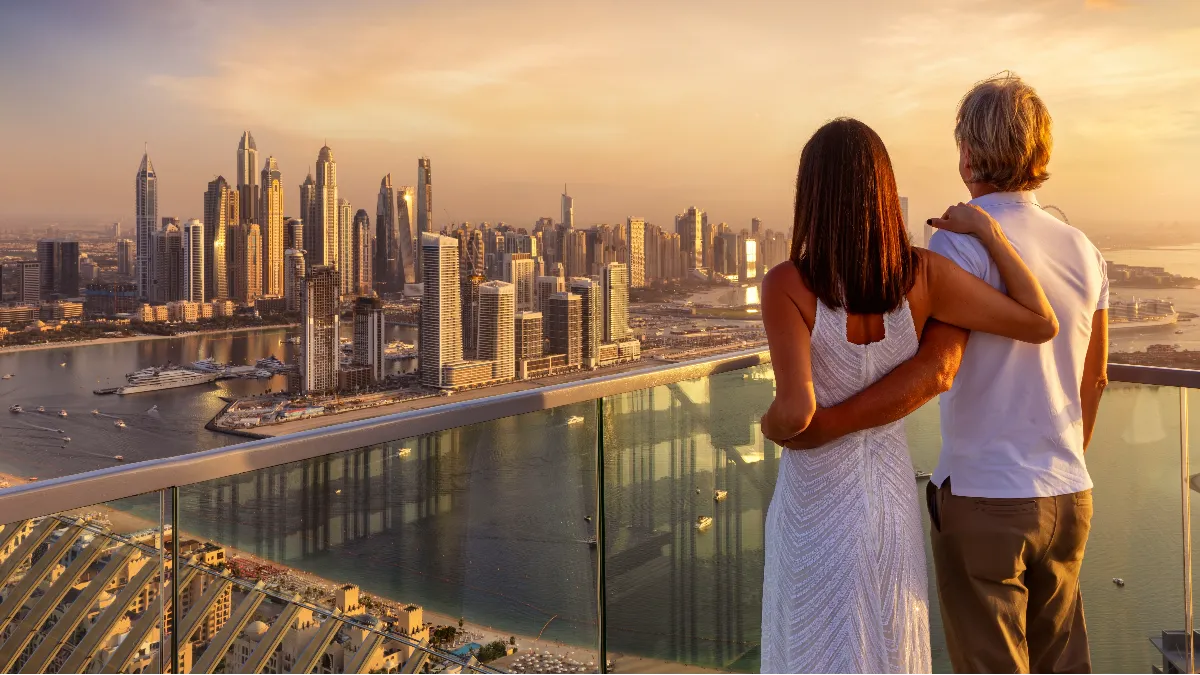
The honest answer is that Dubai offers something most markets cannot: rental income with no tax on it, property prices that still look reasonable against many other cities and a legal framework that is genuinely transparent for foreign buyers.
Dubai's tax-free regime on rental income and capital gains means investors keep 100% of their returns; this is a stark contrast to most countries, where property profits can be taxed.
If you are someone building a portfolio rather than just buying a home, that difference compounds meaningfully over time.
Can I buy property in Dubai from India?
Yes and the process is more straightforward than most people expect. The key framework you need to understand before anything else is the Liberalised Remittance Scheme or LRS.
The RBI's LRS permits resident individuals to remit up to USD 250,000 per financial year for permitted capital account transactions, including the purchase of immovable property abroad.
That is your primary route for moving funds from India to Dubai legally and cleanly.
The purpose code for property purchases under LRS is S0005, Indian investment abroad in real estate. Banks will insist on a Sale and Purchase Agreement or equivalent closing documents before processing the transfer.
FEMA prohibits Indian residents from borrowing funds abroad to buy property, meaning all overseas property purchases must be self-funded. If the property value exceeds USD 250,000, families can pool their LRS limits by making each contributing member a co-owner and payments can also be structured across multiple financial years.
For a complete overview of overseas property remittances, explore our LRS guide covering limits, documentation and RBI regulations for Indian investors.
What does it actually cost to buy property in Dubai
This is the question most first-time buyers ask too late. The purchase price is only part of the cost.
The main Dubai Land Department fee is 4% of the property's purchase price, paid by the buyer at the time of transfer.
On a property worth AED 2 million, that is AED 80,000 before you factor in anything else. For properties above AED 500,000, a registration fee of AED 4,000 plus 5% VAT also applies.
Agent commission typically runs at 2% of the sale price. Add legal or conveyancing support and you are looking at a total transaction cost of somewhere between 6% and 8% on top of the purchase price.
Build that in from the start and there are no surprises at the finish line.
There are no extra transfer taxes for foreign buyers in Dubai; you pay the same 4% DLD registration fee whether you are a UAE resident, a GCC national or an investor from India.
That is a clean, transparent system that Indian buyers tend to appreciate.
Best areas to buy property in Dubai for Indians
Dubai Marina is the most popular choice for investors targeting rental income. Studios and one-bedroom units in Dubai Marina deliver promising gross yields.
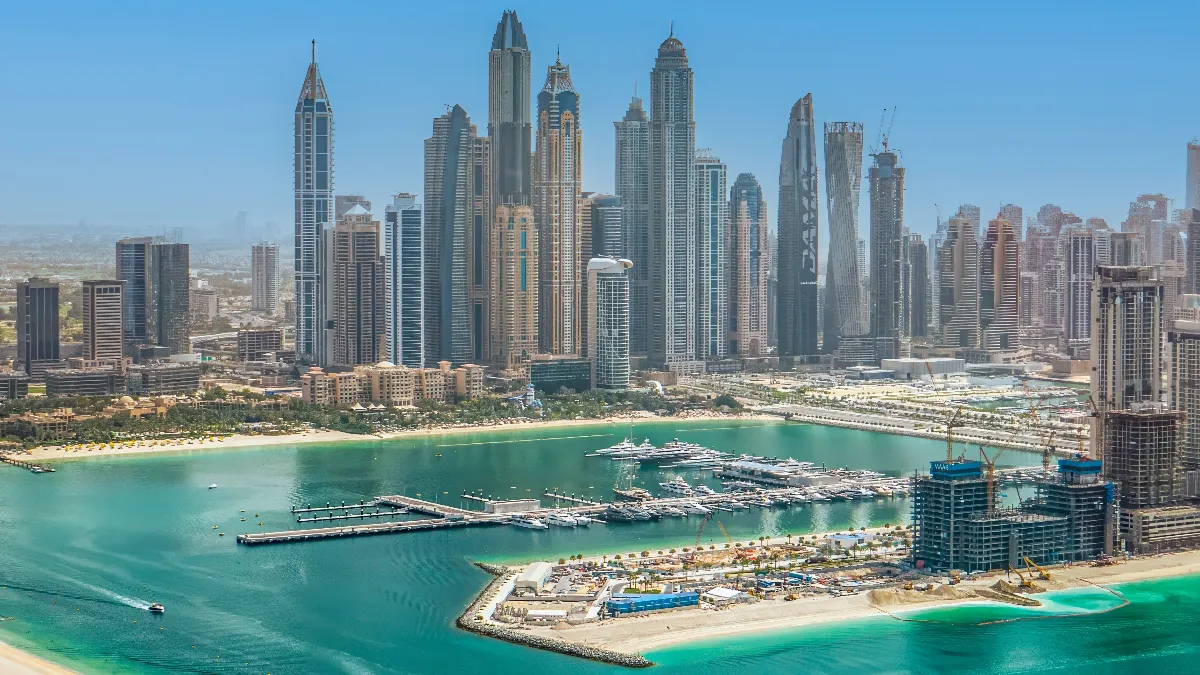
This vibrant area has deep demand from working professionals and a liquidity that makes resale relatively straightforward.
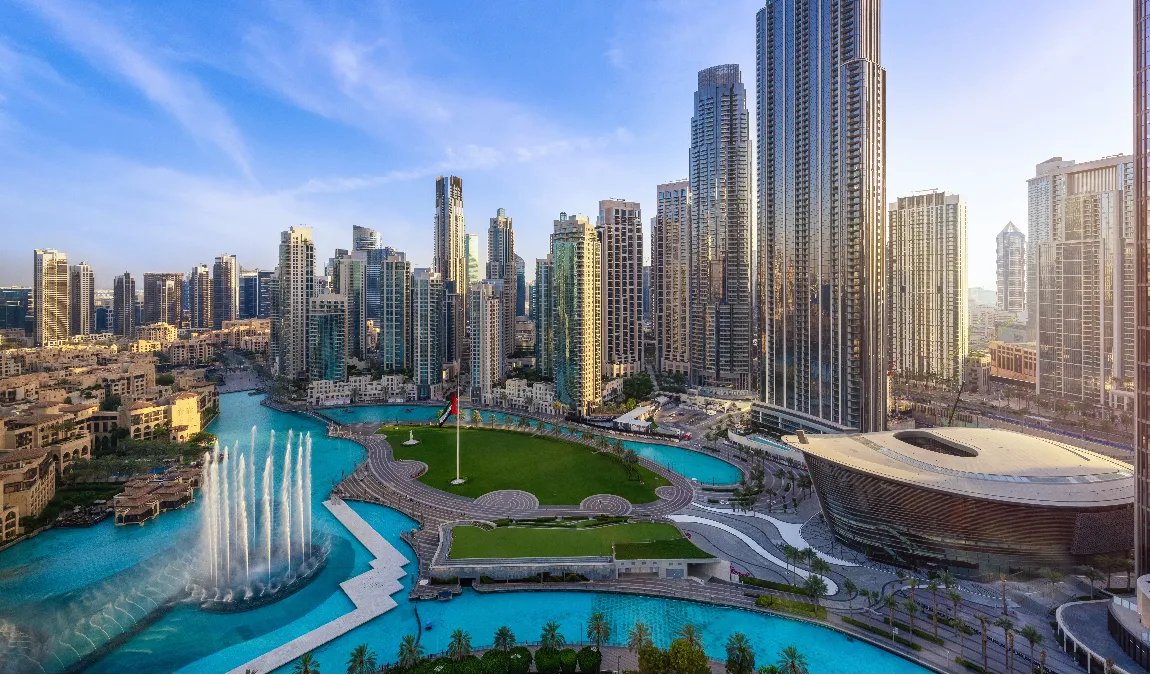
Downtown Dubai is where buyers who want capital appreciation alongside income tend to look. Downtown delivers promising returns, with the trade-off coming in the form of stronger capital appreciation, stability and higher-quality long-term corporate tenants.
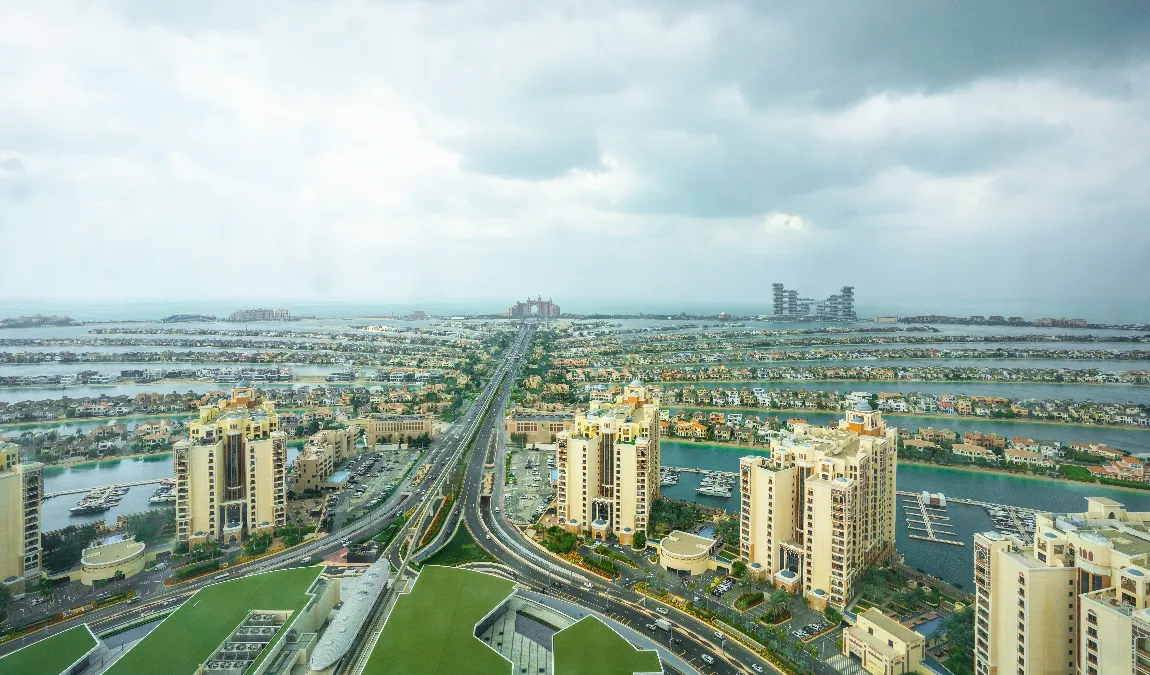
Palm Jumeirah sits at the luxury end and appeals to HNIs looking for trophy assets. Palm Jumeirah recorded 13.8% price growth in Q1 2025 alone, with rental yields ranging between 8 and 15% depending on the unit. Entry prices are higher, but so is the ceiling.
Jumeirah Village Circle (JVC) is where buyers with a tighter budget, without compromising on yields, tend to land. JVC offers affordable entry prices with rental yields reaching up to 7.8%. It is a practical choice for a first Dubai purchase.
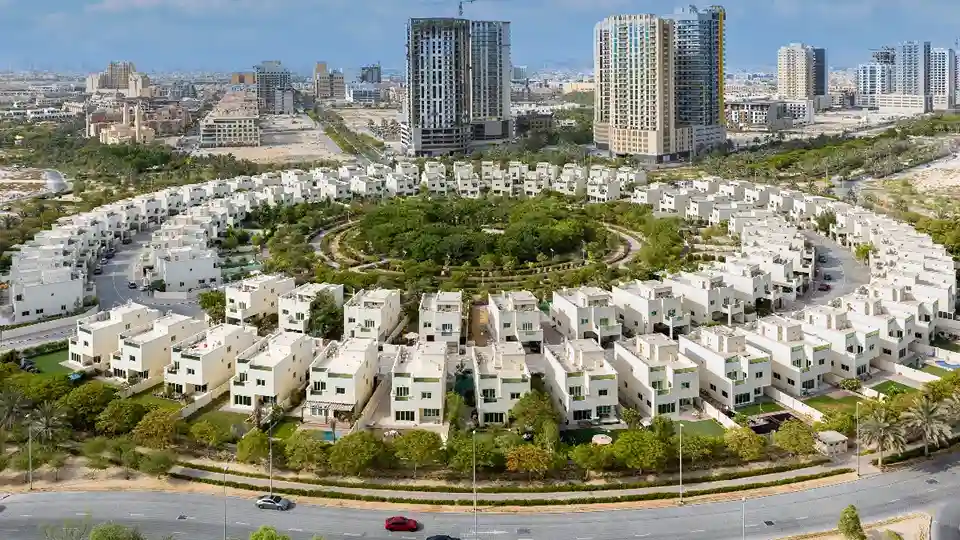
For a fuller breakdown by budget and investment goal, you can read our guide to the best areas to buy property in Dubai.
The buying process, step by step
Once you have identified a property and agreed on a price, the process moves quickly in Dubai relative to most other markets.
You sign a Memorandum of Understanding (MOU), pay a 10% deposit and the developer or seller applies for a No Objection Certificate. Transfer happens at a Dubai Land Department-approved trustee office, where the title deed is issued in your name.
For off-plan purchases, which are extremely popular among Indian investors given the developer payment plans available, the process involves an Oqood registration rather than an immediate title deed.
The Oqood registration fee is a one-time charge of 4% of the property value at the time of purchase and many developers offer DLD fee waivers as part of their promotional offers. It is worth asking about this upfront.
Pros and cons of buying property in Dubai from India
No investment is without its considerations and Dubai is no exception.
On the positive side: no property tax, no capital gains tax, strong rental demand, a stable currency pegged to the US dollar and a clear freehold ownership structure for foreigners in designated zones.
The Golden Visa, available to property investors above AED 2 million, adds a residency benefit that many Indian buyers factor into their decision.
On the other side, the DLD fees make short-term flipping expensive. Service charges vary widely by building and can affect net yields if not checked in advance.
And buyers who do not route their funds correctly through LRS with the right documentation can face FEMA compliance issues back home.
None of these is a reason to avoid the market; they are reasons to go in prepared.
How Benham and Reeves India helps investors
Benham and Reeves India has been working with local buyers to tap into the London property market for decades and our team brings that same discipline to Dubai-focused enquiries.
We understand the LRS process, we know which developments have strong rental track records and we work with buyers at every stage. This includes initial shortlisting, post-purchase letting and management.
If you are comparing Dubai against other markets or if you have already decided and want to understand the process in detail before committing, get in touch with our India office for a no-obligation conversation.
Share
About the Author
Sushant is an accomplished real estate professional with a Master’s in International Business from the University of Strathclyde UK, and an MBA from his studies in India. With over a decade of international experience across the UAE, India, and South Africa, he brings a deep understanding of global property markets and investment dynamics. As Head of Business Development for Benham and Reeves in the Delhi region, Sushant specialises in driving growth in emerging real estate markets, managing HNI portfolios across diverse asset classes and collaborating with leading developers such as EMAAR and DAMAC. An outgoing and people-oriented professional, he values building long-term relationships with clients. Outside of work, Sushant is an avid traveller and foodie who loves exploring new cultures.View all posts by Sushant Ohri